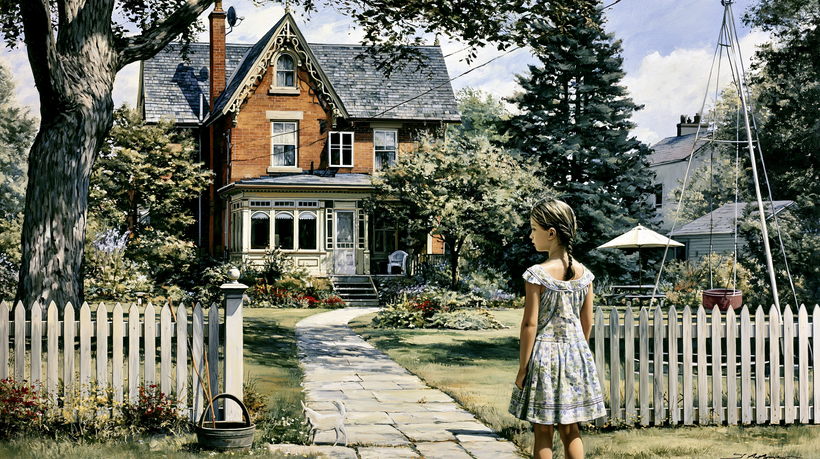
By the time I was eight years old, my life had quietly divided itself into two worlds.
It was 2003, and whatever conversations society was beginning to have about gender identity, they were still far away from the world I lived in. Children like me were not openly discussed, understood, or embraced in most places. At school, I was still Glen. I wore boys’ clothes, answered to my given name, and moved through the ordinary routines expected of a young boy growing up in Spokane, Washington. Nothing about my outward life suggested anything unusual. I understood very early that there were parts of myself that belonged only at home, behind closed doors, in carefully protected spaces.
But evenings and weekends slowly became something different.
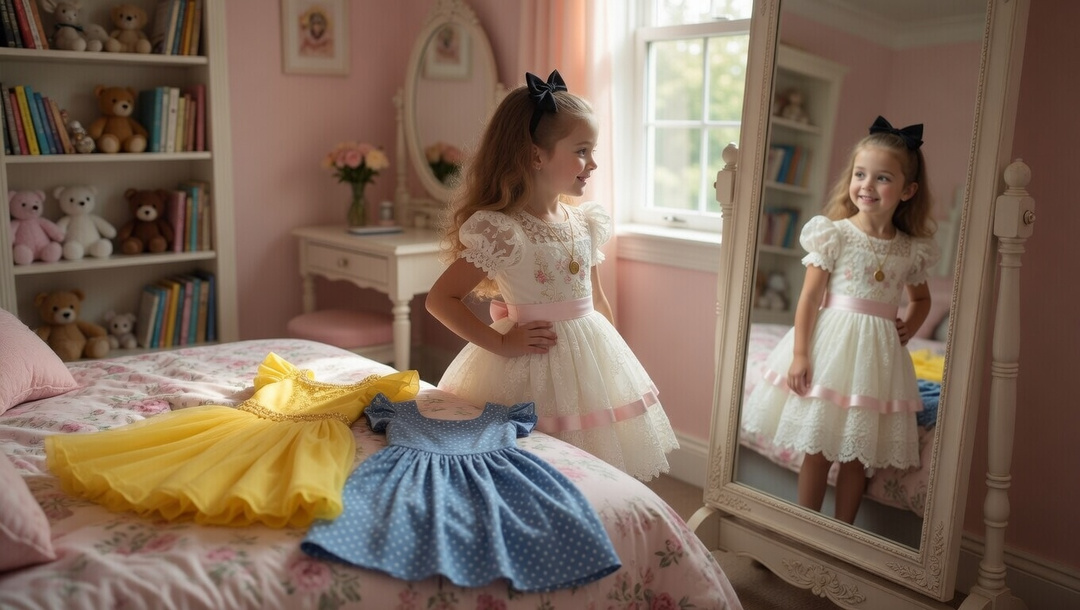
Inside Amanda’s world, another version of me was beginning to emerge—one that no longer felt entirely imaginary. By then, femininity had stopped feeling like simple playacting or emotional escape. It had become something joyful. Something expressive. I began to genuinely look forward to those moments when I could step into softer clothing, experiment with presentation, and feel connected to a side of myself that no longer seemed rooted only in sadness or confusion. For the first time in my life, I was not merely trying to solve emotional pain. I was beginning to experience happiness.
That change mattered more than I understood at the time.
Looking back now, I think Amanda noticed it too. Earlier on, much of my femininity had been intertwined with emotional longing, fear, and the desperate hope that changing myself might somehow heal the instability around me. But around the age of eight, something began shifting inside me. I started making choices not because I thought they would fix my family or stop people from leaving, but because I genuinely enjoyed them. I liked feeling pretty. I liked the emotional softness femininity brought into my life. I liked the creativity, the self-expression, the sense of calm and excitement that came with becoming Veronica.
And slowly, I began thinking of Veronica not simply as something I did, but as someone I was becoming.
To Amanda’s credit, she also understood the dangers surrounding that world at the time. However strongly she believed in me, she was careful. She knew the world outside our home was not prepared to understand a child like me. In public, she remained cautious. She never pushed me toward openly living as Veronica at school or forcing confrontations with a society that would likely respond with cruelty and confusion. Whatever certainty Amanda carried privately, she still understood that childhood itself could become emotionally dangerous if pushed too far, too quickly.
So I learned to live a double life.
At school, I learned how to perform boyhood well enough to avoid attention. I understood the expectations placed on me even when they felt unnatural. But inside myself, another identity was growing stronger and more emotionally real with every passing month. By then, I was no longer simply responding to Amanda’s encouragement. I had begun making active choices of my own. I wanted the clothes. I wanted the experiences. I wanted the femininity. And perhaps most importantly, I wanted the happiness I found there.
That was the beginning of something profoundly important in my life: the moment my choices stopped being entirely reactive and started becoming intentional.
I was still only a child, of course. My understanding of identity, sexuality, and the future remained incomplete and emotionally driven. But I had crossed an invisible threshold. Veronica was no longer merely the answer to childhood pain. She had become a source of joy, creativity, excitement, and personal meaning. And once I experienced that joy for myself, independent of fear or sadness, it became impossible to completely separate myself from her again.
Even at eight years old, I knew there was something deeply real about the happiness I felt when I became Veronica.





Leave a Reply